Stone installation
Natural-Stone Installation: Methods, Joints and Quality Control
Choose and control a natural-stone installation method by coordinating substrate, moisture, adhesive or mortar, coverage, joints, movement, cleaning and acceptance.
Select the method for the system
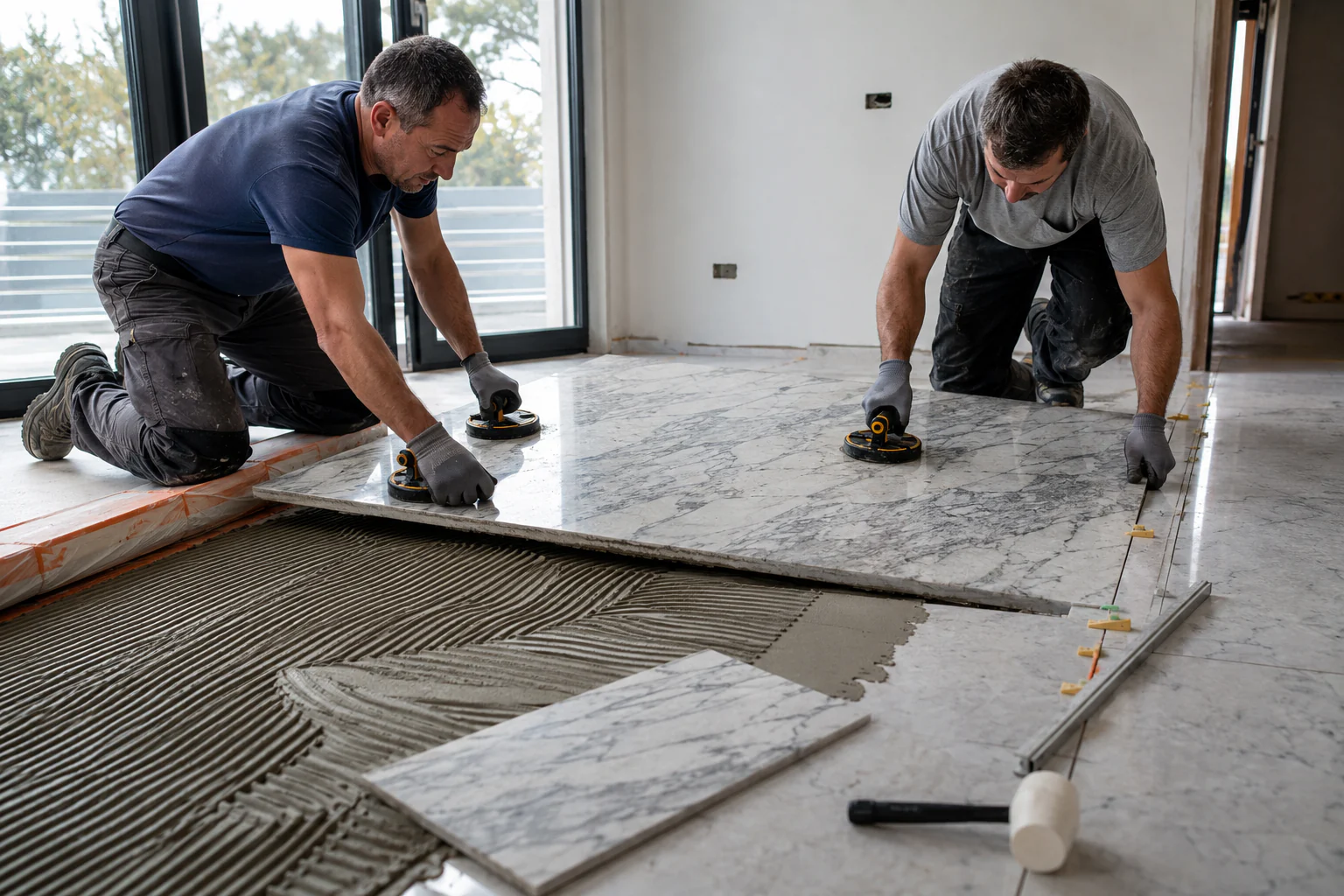
Bonded installation, mortar-bed laying, mechanical fixing, pedestal systems and traditional masonry answer different formats and exposures. Use a complete method suited to the stone, substrate and project rules.
Do not combine products or details from unrelated systems without written technical justification.
Accept the substrate first
Check strength, flatness, level, cracks, movement joints, residual moisture and contamination. Wet areas need completed and inspected waterproofing before stone work begins.
Record environmental conditions and outstanding repairs. Installation should not hide an unresolved substrate.
Adhesive, mortar and coverage
Product choice depends on stone sensitivity, backing, format, exposure and working conditions. Light or translucent stone may require white products and controlled moisture.
Apply the specified method and verify full support where required. Voids can create breakage, moisture patterns and hollow sound.
| Stage | Control point |
|---|---|
| Material delivery | Approved batch, finish and piece numbers |
| Dry layout | Vein, colour and cuts |
| Mixing | Water, time and batch consistency |
| Bedding | Coverage, thickness and support |
| Joints | Width, depth and movement locations |
| Cleaning | Compatible method before residues harden |
| Handover | Dry appearance, geometry and records |
Joints and movement
Joint width must accommodate dimensional tolerance and installation. Perimeters, structural joints and designed movement joints cannot be filled rigidly and forgotten.
Coordinate joints with slab layout, thresholds, heating and changes of substrate.
Inspection and protection
Inspect as work progresses rather than waiting until completion. Check lippage, line, levels, support, cuts, joints and cleanliness.
Protect finished stone from later trades with breathable, non-staining materials. Provide care guidance and retain spare pieces where practical.
Need advice for a real project?
Marble Import supports international homeowners, architects and interior designers with stone selection, samples, technical feasibility and coordination of high-end stonework in France and across Europe.