
Diagnosis and installation defects
Diagnosis: Loose Stone or Hollow-Sounding Floors
Investigate hollow sounds, debonding and loose stone by examining installation method, coverage, substrate, moisture, movement and the extent of loss of support.
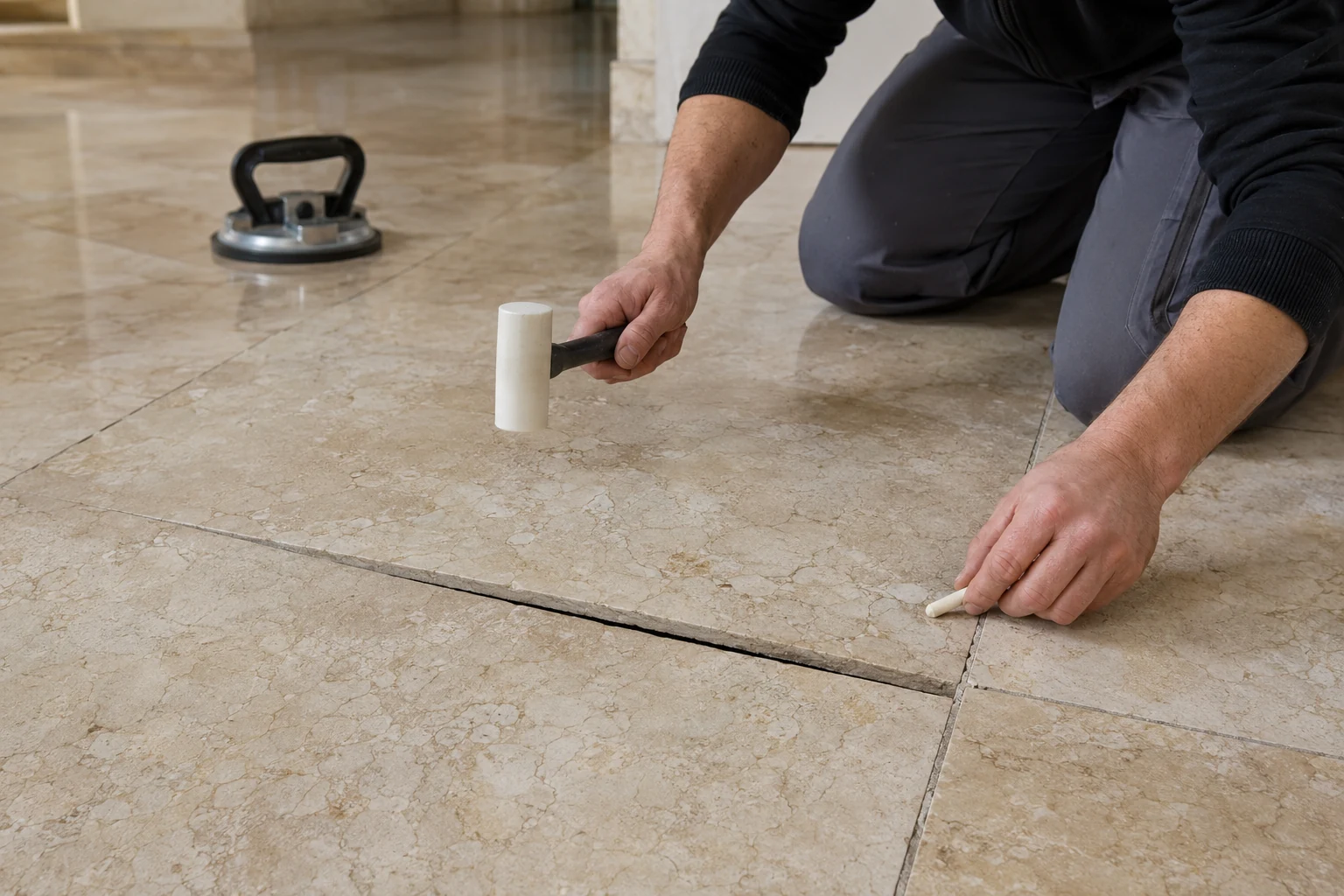
A hollow sound is an observation
Different construction systems can sound different. A hollow response may indicate a void, debonding, a floating build-up or simply local geometry. It is not a diagnosis by itself.
Map sound consistently and compare with known construction and movement patterns.
Look for movement and risk
Check rocking, cracked joints, lifted edges, lippage, broken pieces and changes over time. Loose wall or façade stone can create immediate falling risk and requires safety action.
Floors in traffic routes may also become a trip or breakage hazard.
Possible mechanisms
Poor adhesive coverage, skinned adhesive, dusty substrate, excessive moisture, weak screed, incompatible products and structural movement can all reduce support.
Thermal cycles or moisture-sensitive stone can contribute to curling and stress.
| Evidence | Possible interpretation |
|---|---|
| Isolated hollow zone with no movement | Local void requiring monitoring or assessment |
| Rocking piece | Loss of support or bond |
| Cracked joints in pattern | Substrate or thermal movement |
| Dark moisture plus debonding | Leak or trapped water |
| Adhesive on stone only | Possible substrate bond failure |
| Adhesive on substrate only | Possible stone-interface failure |
Investigate proportionately
Begin with drawings, history, sounding map and moisture observations. Use thermal imaging or other non-destructive tools only with competent interpretation.
Targeted lifting or cores can reveal layers but should be planned to preserve evidence.
Repair the cause, not only the sound
Local lifting and resetting may suit isolated stable defects; widespread failure can require systematic replacement and substrate correction. Injection is not universally appropriate.
Verify adhesion, support and dry appearance in a trial repair before repetition.
Need advice for a real project?
Marble Import supports international homeowners, architects and interior designers with stone selection, samples, technical feasibility and coordination of high-end stonework in France and across Europe.