Memorial and funerary stone
Memorial Stonework: Engraving, Gilding, Stability and Local Rules
Coordinate stone selection, inscriptions, gilding, foundations, fixings, cemetery rules and long-term maintenance for durable and respectful memorial work.
Begin with the cemetery and the family brief
Rules for dimensions, foundations, installation times, permitted equipment and inscriptions vary by cemetery and country. Obtain written requirements before design and fabrication.
The family’s cultural, religious and personal wishes should be translated into a clear drawing showing every visible face, text and finish.
Stone and exposure
A memorial remains outdoors through rain, frost, pollution, biological growth and maintenance visits. Select stone, thickness and finish for the exact climate and geometry.
Polishedshed dark stone gives high inscription contrast but can show deposits; porous light stone develops a different patina. Explain ageing without presenting it as a defect.
Lettering and gilding
Approve wording, spelling, dates, typeface, spacing and alignment on a full drawing. Carved, sandblasted, raised and metal lettering require different depths and stone characteristics.
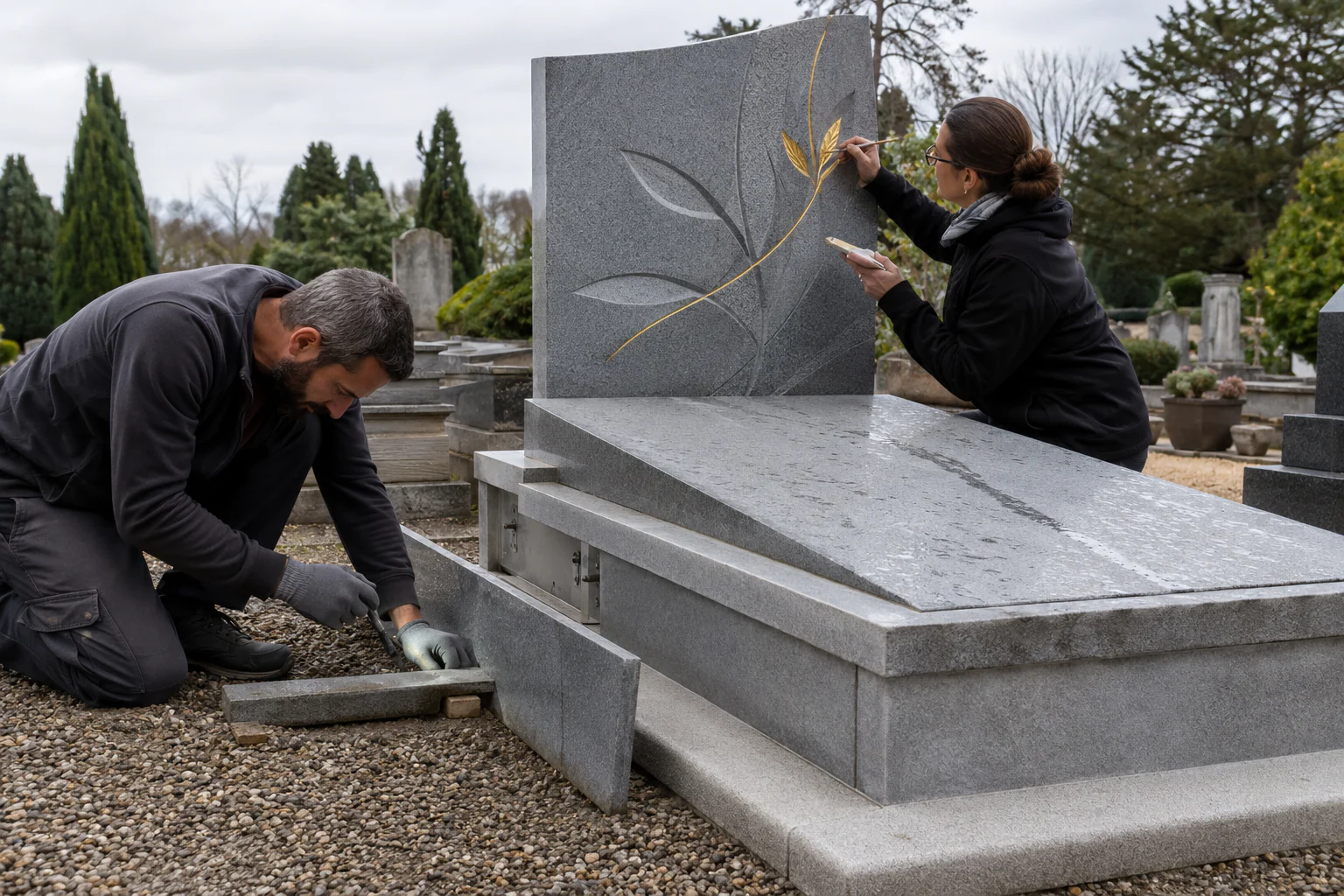
Gold leaf and paints need suitable recesses, preparation and renewal intervals. Test colour and legibility on the selected finish.
| Item | Approval required |
|---|---|
| Inscription | Exact text, punctuation and line breaks |
| Typeface | Style, size, spacing and contrast |
| Symbol or portrait | Rights, resolution and placement |
| Gilding or paint | Colour, system and maintenance |
| Fixings | Material, dimensions and concealed detail |
Stability and installation
Headstones, covers and vertical elements require stable foundations and designed connections. Wind, impact, settlement and people leaning on the memorial must be considered.
Use corrosion-resistant fixings and details that do not trap water. Heavy pieces require planned lifting and an authorised installation team.
Cleaning and renewal
Use gentle stone-specific cleaning after identifying deposits and previous treatments. Acids, bleach, pressure washing and metal brushes can damage stone, joints or lettering.
Periodic inspection should cover movement, open joints, unstable ornaments and inscription condition. Obtain cemetery permission before significant repair or alteration.
Need advice for a real project?
Marble Import supports international homeowners, architects and interior designers with stone selection, samples, technical feasibility and coordination of high-end stonework in France and across Europe.