
Public realm and infrastructure
Natural-Stone Road Construction and Pavement Build-Ups
Design durable natural-stone streets by coordinating traffic, subgrade, drainage, bedding, joints, unit geometry, accessibility and maintenance.
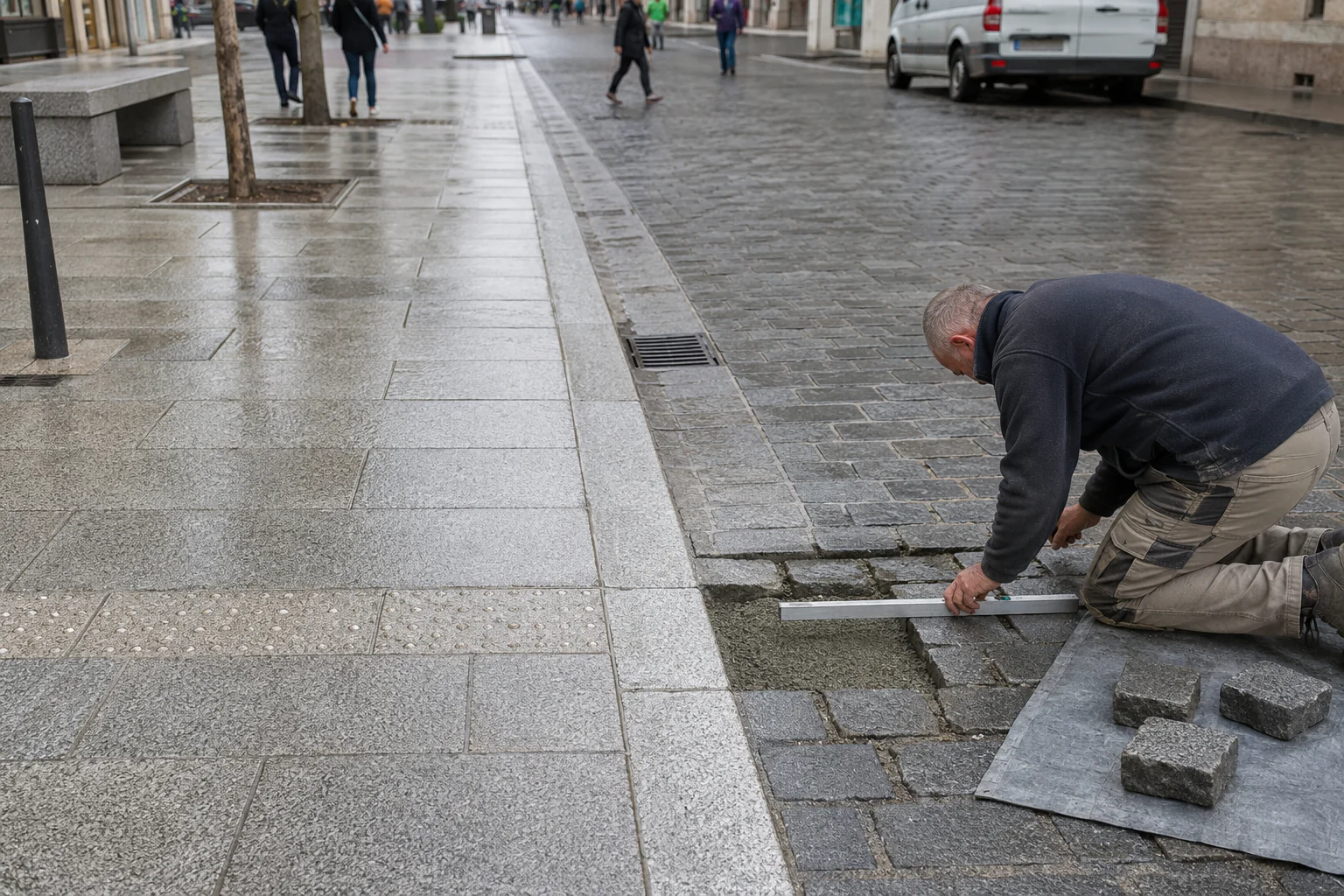
The pavement is a structural system
A stone surface succeeds only when the subgrade, sub-base, base, bedding, joints and drainage work together. A strong paver cannot compensate for weak ground or trapped water.
Traffic category, turning forces, service vehicles, climate and maintenance access should be defined before selecting unit size and thickness.
Ground and foundation layers
Investigate soil bearing, frost susceptibility, water table and existing services. Formation must be stable, correctly graded and protected from contamination.
Granular or bound layers are designed for loads and drainage. Local soft spots and poorly compacted service trenches commonly cause settlement.
Bedding, joints and restraint
Unbound systems require compatible bedding and jointing aggregates, controlled moisture and effective edge restraint. Rigid systems require engineered mortar, movement strategy and curing.
Hybrid details can trap water or create isolated hard points. Select one coherent build-up and resolve transitions.
| Observed failure | Likely mechanisms | Investigation |
|---|---|---|
| Rutting or settlement | Weak subgrade or insufficient compaction | Levels, cores and ground review |
| Loose pavers | Lost jointing or inadequate restraint | Joint and edge inspection |
| Broken slabs | Insufficient thickness or voids | Load, bedding and support checks |
| Frost damage | Saturation and unsuitable stone or build-up | Drainage and material testing |
| Staining | Runoff, salts or incompatible mortar | Moisture paths and product history |
Drainage and winter conditions
Falls, channels, gullies and permeable layers must evacuate water without washing out bedding. Details around trees, covers and façades deserve particular attention.
De-icing salts, frost and snow-clearing equipment affect both stone and joints. Confirm resistance and plan maintenance for the project climate.
Inspection and maintenance
Approve a representative trial area including joints, cuts, drainage and interfaces. Inspect levels, line, joint filling and rocking units during installation.
Regular sweeping, joint replenishment, prompt repair and drainage cleaning preserve performance and reduce expensive reconstruction.
Need advice for a real project?
Marble Import supports international homeowners, architects and interior designers with stone selection, samples, technical feasibility and coordination of high-end stonework in France and across Europe.