Pools and wet environments
Pools and Spas: Water Chemistry, Salt, Chlorine and Stone Ageing
Understand how pool-water chemistry, disinfectants, salt, evaporation, wetting cycles and cleaning affect natural stone, joints, metals and finishes.
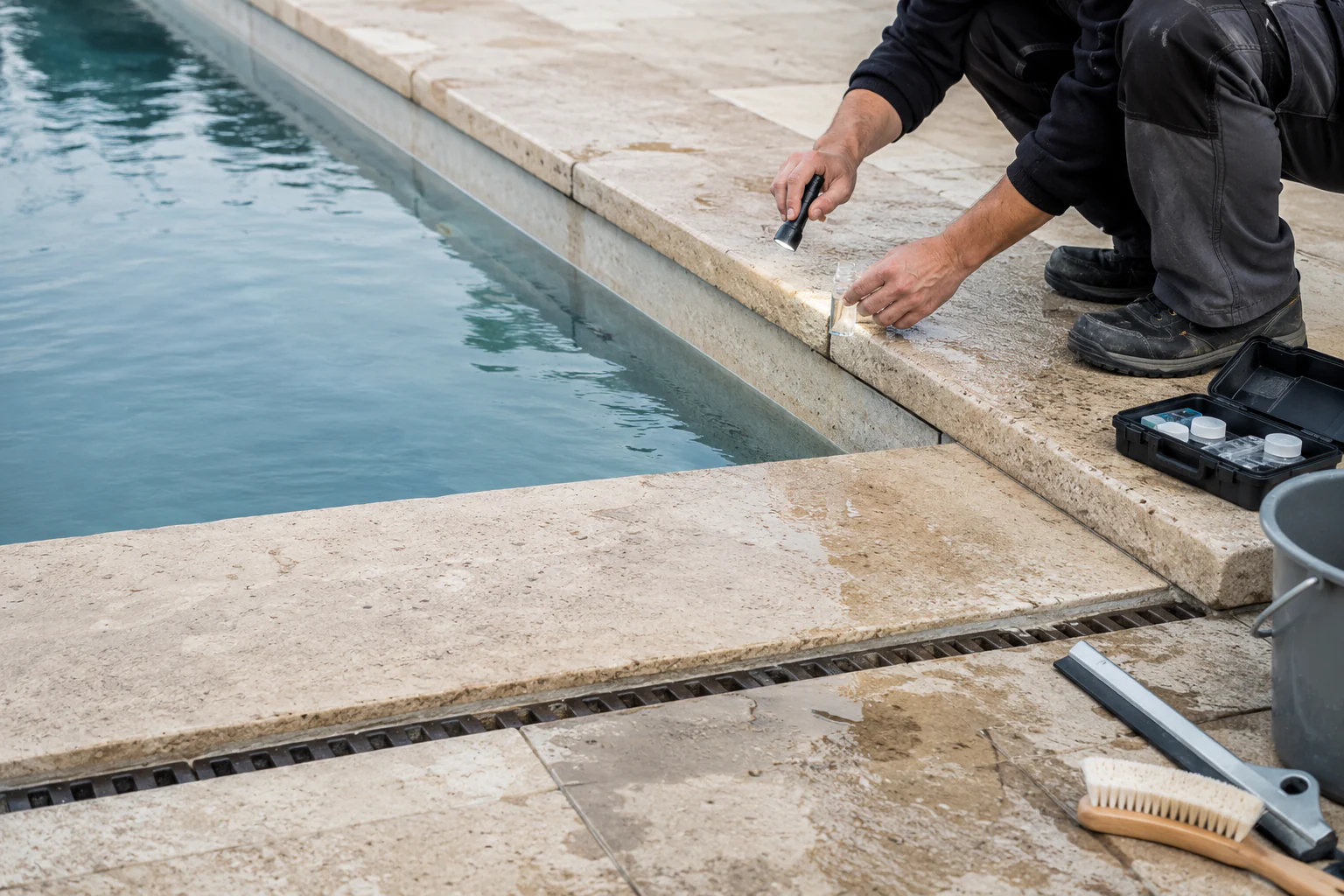
Pool water is a managed chemical environment
pH, alkalinity, hardness, disinfectant, temperature and dissolved salts interact with stone, grout, sealants and metals. Balanced bathing water for users is not automatically harmless to every material.
Ask for the actual treatment system and operating range before specifying stone around or inside the pool.
Salt and chlorine
A saltwater pool still produces chlorine through electrolysis and can concentrate chlorides through splash and evaporation. Chlorides increase corrosion risk for unsuitable metals and crystallised salts can damage porous materials.
Traditional chlorination also creates repeated chemical exposure. Dose and control matter more than marketing labels.
Carbonate stone and water balance
Marble, limestone and travertine contain carbonate minerals that can react with acidic conditions. Low pH or aggressive water may roughen the surface, while scale can form under other conditions.
A sealer cannot correct unsuitable water chemistry. Material selection and water management must work together.
| Symptom | Possible mechanisms | First checks |
|---|---|---|
| White deposits | Scale or soluble salts | Water analysis and deposit identification |
| Roughened marble | Acidic or aggressive water | pH history and stone examination |
| Rust staining | Corroding metal or mineral inclusion | Fixings and stain source |
| Dark damp areas | Trapped moisture or poor drainage | Falls, joints and substrate |
| Flaking joints | Chemical exposure or movement | Grout system and water balance |
Splash zones and evaporation
Pool edges and beaches experience wetting, drying, sunscreen, cleaning products and concentrated salts. These zones can be more demanding than continuously submerged surfaces.
Provide drainage, falls and details that avoid standing water. Select finishes for wet slip resistance and barefoot comfort.
Operation and diagnosis
Keep water-treatment logs and avoid unrecorded shock dosing. Maintenance teams should use products compatible with both the pool system and stone.
When deterioration appears, analyse water history, deposits, joints, metals and construction before cleaning. Treating the visible mark alone can accelerate damage.
Need advice for a real project?
Marble Import supports international homeowners, architects and interior designers with stone selection, samples, technical feasibility and coordination of high-end stonework in France and across Europe.