Memorial architecture
Natural-Stone Memorials, Headstones and Cemeteries
Understand the history, design and construction of natural-stone memorials, from cultural meaning and material selection to stability, installation and conservation.
Stone, memory and place
Stone has long expressed permanence, identity and collective memory. Memorial forms range from simple markers and stelae to tombs, chapels and civic monuments.
Design should respect the individual, local cemetery character and cultural traditions without reducing them to decorative motifs.
Material and form
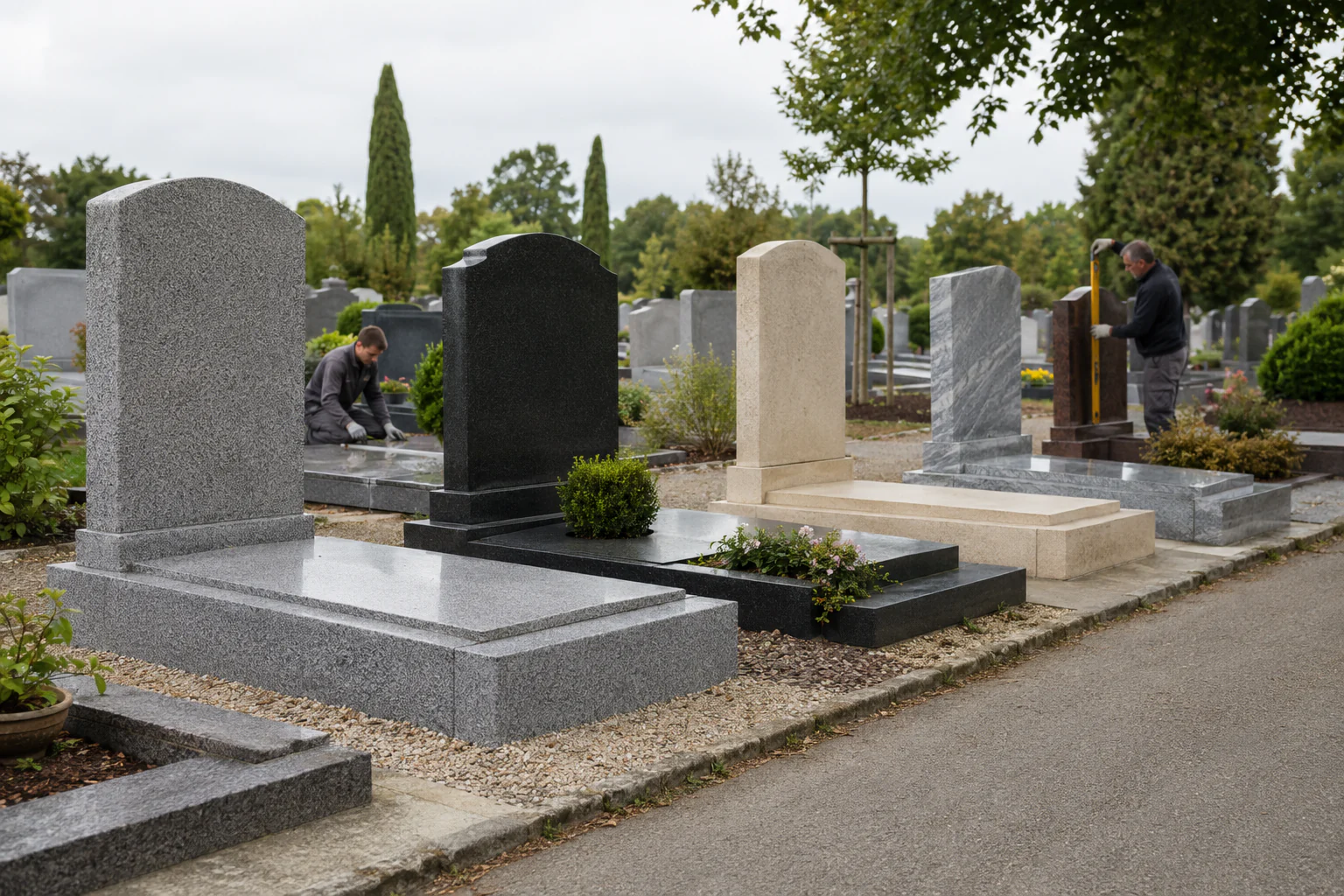
Granitee is widely used for weather resistance and crisp lettering; marble and limestone offer carving depth and historic character but demand suitable exposure and care. Other regional stones may reinforce a sense of place.
The best choice considers block soundness, finish, inscription method, thickness, water shedding and future repair.
| Form | Main design issue | Construction focus |
|---|---|---|
| Headstone or stele | Proportion and inscription | Foundation and overturning stability |
| Ledger slab | Water and access | Substrate, fall and joints |
| Kerbed grave | Geometry and settlement | Foundation continuity |
| Sculpture | Fragile projections | Stone quality and concealed fixing |
| Mausoleum | Complete building performance | Structure, roof, drainage and ventilation |
Geometry, water and durability
Horizontal surfaces should have deliberate falls and edges that shed water. Deep pockets, open joints and poorly protected metal encourage staining and frost damage.
Base details must accommodate soil movement while keeping the visible composition aligned. Large thin slabs should not bridge unsupported spaces.
Workshop and installation
Approve drawings, stone, finish, inscription and assembly before fabrication. Dry-assemble complex monuments and mark all pieces.
Confirm cemetery access, lifting route, foundation readiness and authorised working periods. Protect neighbouring memorials during installation.
Conservation of historic memorials
Record inscriptions, fractures, leaning, biological growth, corrosion and earlier repairs before intervention. Safety takes priority where elements are unstable.
Clean and repair with minimum intervention. Preserve patina and tool marks, use compatible materials and document replacement so that the memorial history remains legible.
Need advice for a real project?
Marble Import supports international homeowners, architects and interior designers with stone selection, samples, technical feasibility and coordination of high-end stonework in France and across Europe.