In The Chase, the campaign film for BLEU DE CHANEL L’EXCLUSIF, the fragrance is treated as a coveted object. Directed by Alfonso Cuarón and featuring Jacob Elordi, the film borrows the pace and visual language of an action movie. Yet one of its most memorable elements is architectural: monumental backlit blue-onyx panels that turn the set into a luminous mineral vault.
The material deserves a precise explanation. This is not an onyx naturally quarried in an intense blue colour. It is natural white architectural onyx that has been coloured blue, then illuminated from behind with a cool light source. The stone’s veining, banding and variations in translucency are natural; the blue tone is an aesthetic treatment created for the visual identity of the fragrance.
For architects, interior designers and private clients, the installation offers three useful lessons: the stone must be selected panel by panel, the light must be designed with the material rather than added afterwards, and the technical build-up must be resolved before fabrication begins.
1. Select the stone for the complete composition
Architectural onyx is valued for its layered mineral structure. Some areas are milky and relatively opaque; others are clearer and allow more light to pass through. When the panels are illuminated, these variations become stronger. A slab that appears balanced in daylight may reveal intense bright zones, darker areas or unexpected lines once backlit.

This is why selection cannot be reduced to a small sample. For a large wall, bar, reception desk or feature panel, the design team should review photographs or videos of every slab, identify the cutting direction and agree on the final layout. Bookmatching can create a symmetrical effect; sequential slabs can produce a more continuous mineral landscape. Neither solution is automatically better: the right choice depends on the scale of the room and the atmosphere sought.
Colour treatment adds another variable. It should be assessed on the actual stone, because absorption may vary between dense and porous areas. A mock-up made with the proposed finish, backing and lighting system is far more reliable than a colour reference viewed on screen.
2. Design the lighting and the stone together
Backlighting is not a decorative accessory placed behind a finished wall. It is part of the material specification. The colour temperature, intensity, distance from the stone, distribution of the LEDs and reflectivity of the rear surface all influence the final appearance.
- Colour temperature: cool light reinforces blue and grey tones, while warmer light can soften the stone and reveal cream or amber areas.
- Depth behind the panel: insufficient distance may expose individual LED points or create visible bands.
- Uniformity: the system must compensate for the stone’s natural differences without flattening them.
- Access and maintenance: drivers, wiring and LED modules should remain serviceable after installation.
- Heat and ventilation: the complete build-up must respect the requirements of the stone, resin, support and lighting manufacturer.
The best result is usually obtained through a full-size sample. It allows the project team to validate the stone thickness, reinforcement, joint treatment, background colour and lighting before the final panels are cut. This stage is particularly important when the client or designer is coordinating the project from another country: a scheduled video review, calibrated photographs and an agreed approval protocol make remote decisions much safer.
3. Resolve the technical build-up before fabrication
Onyx is generally more delicate than granite or quartzite. Depending on the variety and the panel size, it may require reinforcement, lamination to glass or another transparent support, carefully engineered fixings and controlled edge details. The weight of the assembly, the substrate, fire requirements and access for replacement must be considered at an early stage.
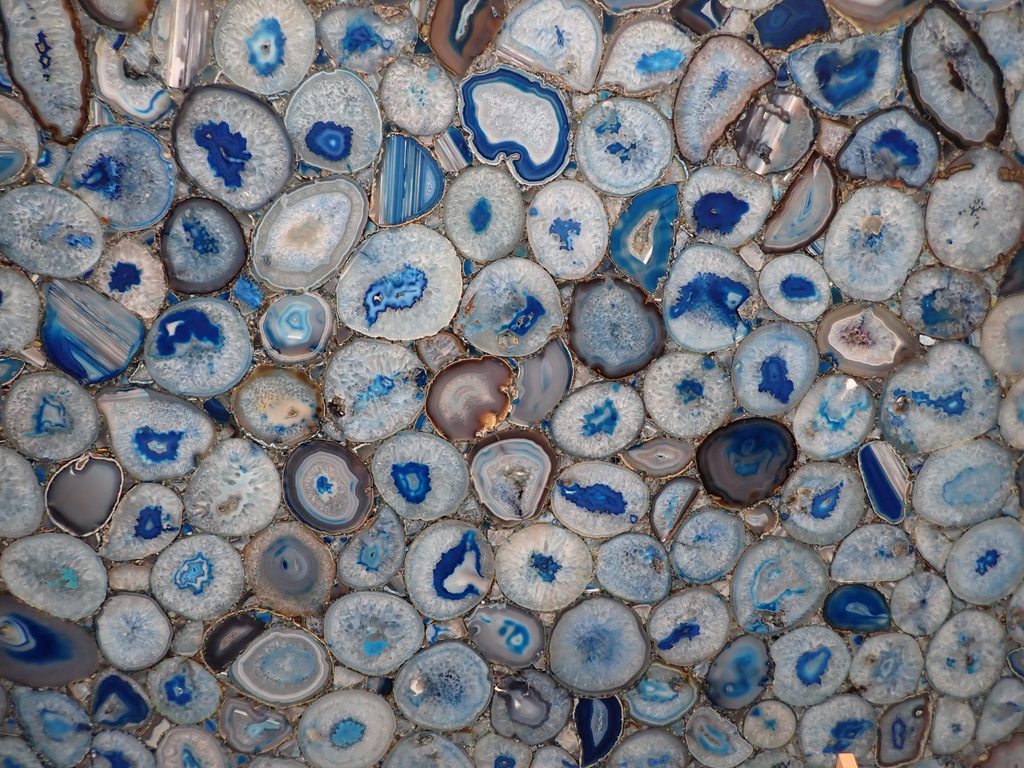
The distinction between onyx and agate is also important. Some descriptions of the campaign refer to a “blue agate wall”, which is understandable because both materials can show strong bands and luminous depth. Architectural onyx, however, is normally a banded calcitic stone formed by successive mineral deposits. Decorative agate panels are commonly assembled from smaller pieces of chalcedony. Their structure, fabrication and cost are different.
A reliable specification should therefore name the actual material, indicate whether it has been coloured or resin-treated, define the finish and support, and state that final approval will be based on the available slabs. Natural variation is not a defect; it is the reason the installation has depth and individuality. The role of technical preparation is to organise that variation into a coherent composition.
Where backlit onyx works best
Backlit onyx is particularly effective where it can be experienced as a focal surface rather than used everywhere. Typical applications include hotel and restaurant bars, reception desks, spa walls, luxury retail displays, private entrance halls, bathroom features and bespoke furniture. In a restrained interior, a single luminous panel can provide more impact than a large quantity of decorative material.
For humid areas or locations exposed to regular contact, the detailing must address water, cleaning products, impacts and joints. The stone should never be chosen only for its appearance. The intended use determines the suitable thickness, protection, substrate and maintenance plan.
Support for international projects in France and Europe
Marbre Import assists international homeowners, architects and interior designers who are working on projects in France or elsewhere in Europe. We can help with material selection, slab sourcing, finish and thickness recommendations, photographic or video approval, samples, fabrication constraints and delivery planning. For high-end projects, we can also coordinate the marble and natural-stone works with the project team and specialist contractors.
If you are managing the project from abroad, discussions can be conducted in English and organised around drawings, schedules and remote slab reviews. Explore our backlit natural-stone expertise, view the English stone catalogue, or send us your project requirements.
Planning a backlit stone feature?
Share your drawings, dimensions, target atmosphere and installation location. We will help you identify the right material and define the decisions that should be secured before fabrication.
Frequently asked questions
Is blue onyx naturally blue?
Some stones may contain naturally cool or bluish tones, but the intense blue seen in this campaign comes from coloured natural white onyx combined with cool backlighting. The natural structure remains genuine; the colour has been intentionally modified.
Can backlit onyx be used in a private home?
Yes. It can be used for a feature wall, bar, bathroom panel, headboard, reception area or bespoke furniture, provided the complete assembly is engineered for the location and maintenance requirements.
Should the slabs be approved before ordering?
Yes. Natural onyx varies considerably. Approval should cover the actual slabs, proposed layout and appearance under the intended lighting. Samples alone are not sufficient for a large composition.
Editorial note: this article is an independent analysis of the campaign set. Marbre Import is not affiliated with or a representative of CHANEL.