Historic construction
Mortars, Lime, Traditional Joints and Historic Stonework
Select compatible lime mortars and traditional joint details by understanding stone, moisture, strength, aggregates, exposure, workmanship and curing.
Mortar works with the masonry
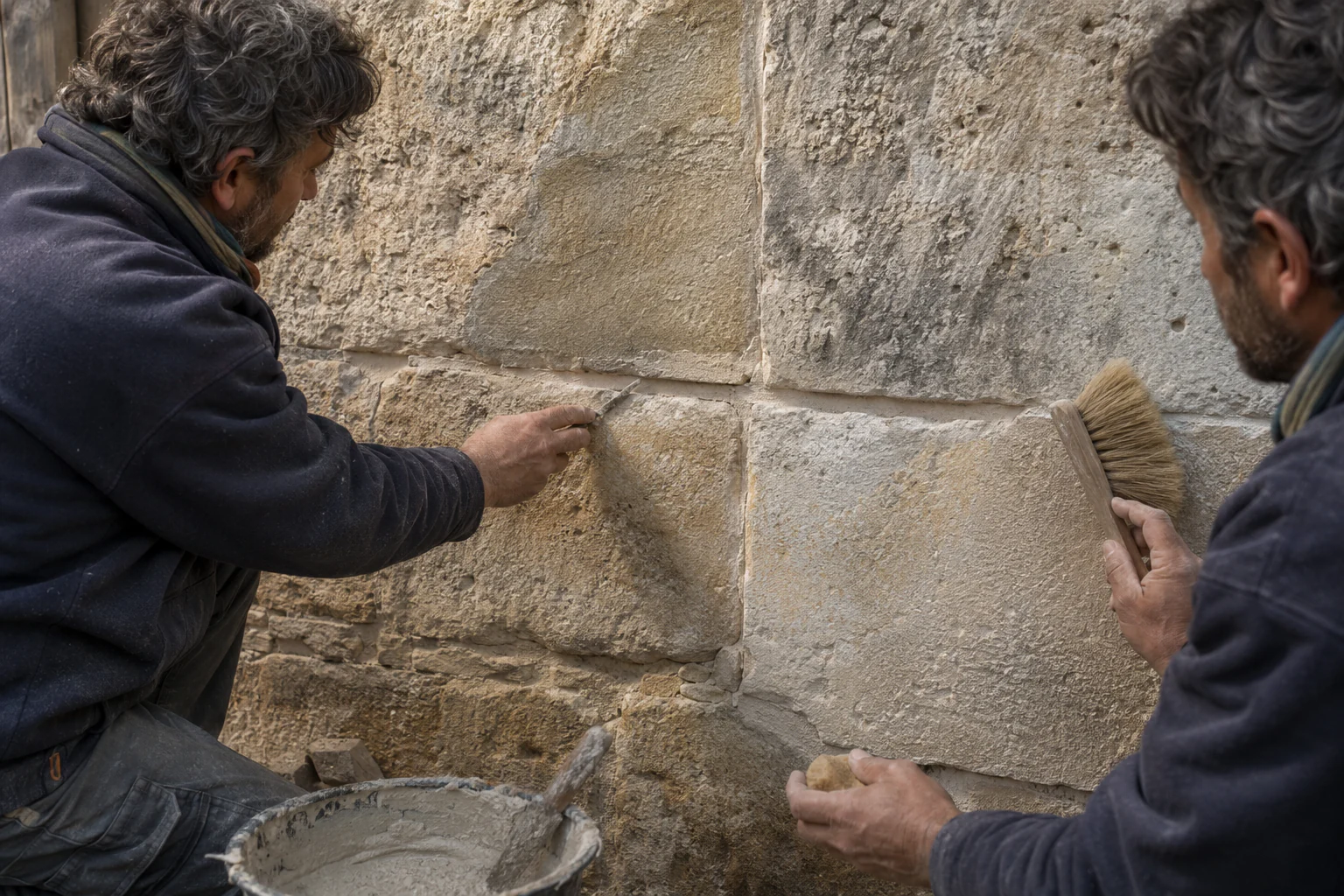
Mortar fills irregularities, distributes contact, bonds units and influences moisture movement. It should not be selected by compressive strength alone.
An excessively hard or impermeable mortar can concentrate damage in softer historic stone and make later repair destructive.
Lime families and aggregates
Air lime, natural hydraulic lime and formulated binders behave differently. Selection depends on exposure, joint thickness, stone, required strength and curing conditions.
Aggregate grading, mineral colour and particle shape control workability, shrinkage and appearance. Analyse historic mortar before trying to reproduce it.
Joints and pointing
Remove failed mortar carefully without widening joints or damaging arrises. Fill depth properly and finish the profile to shed water while respecting the masonry character.
A thin surface smear over hard old mortar is not durable repointing.
| Issue | Likely consequence | Better approach |
|---|---|---|
| Very hard cement mortar | Stone edge decay and trapped moisture | Compatible lower-strength system |
| Shallow pointing | Early detachment | Remove to sound depth and refill |
| Rapid drying | Weak, powdery mortar | Dampen and protect during cure |
| Overfilled smear | Closed surface and lost texture | Tool within the joint |
| Unresolved movement | Recurring cracks | Diagnose stability before repointing |
Moisture and salts
Before repointing, repair roofs, gutters, ground levels and drainage where they cause wetting. New mortar cannot cure properly in every moisture condition.
Soluble salts may crystallise during drying. Identify sources and avoid sealants that shift evaporation into the stone.
Trials, curing and records
Prepare trial areas to approve colour, texture, joint profile and cleaning. Protect fresh work from sun, wind, rain and frost for the required period.
Record binder, aggregate, proportions, water and curing so future repairs can remain compatible.
Need advice for a real project?
Marble Import supports international homeowners, architects and interior designers with stone selection, samples, technical feasibility and coordination of high-end stonework in France and across Europe.