Material comparison
Natural Stone, Engineered Stone and Reconstituted Stone Compared
Distinguish natural stone from engineered quartz, terrazzo, sintered materials and reconstituted products, then compare appearance, performance, fabrication and repairability.
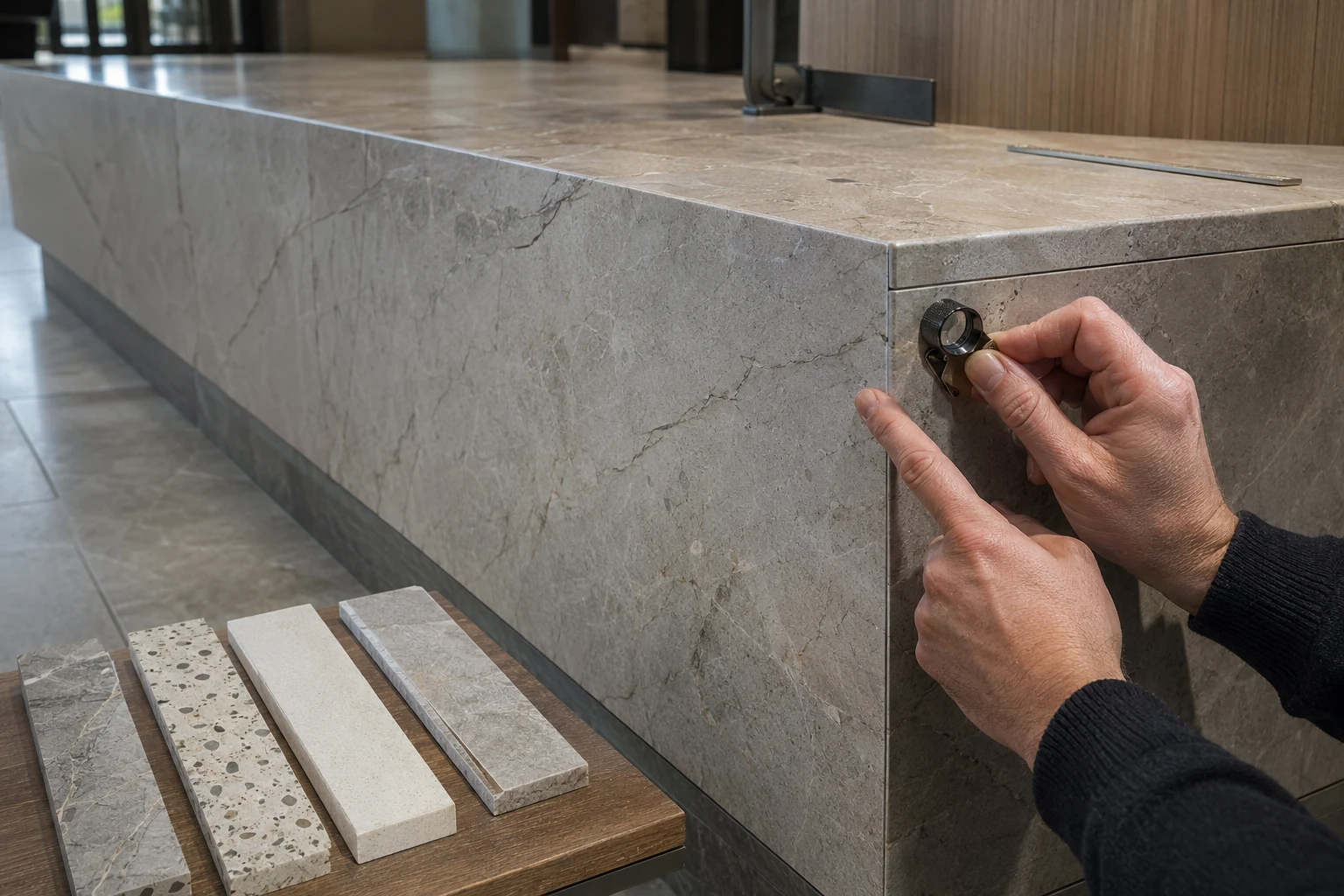
Different materials behind similar appearances
Natural stone is extracted and cut from geological material. Engineered quartz combines mineral aggregate with resin; terrazzo binds chips in cement or resin; reconstituted stone uses crushed stone and a binder. Sintered products are manufactured mineral sheets.
Names vary by market, so identify the product family and manufacturer rather than relying on words such as stone or marble effect.
Variation and visual continuity
Natural stone offers unique geological variation and the possibility of slab selection and book-matching. Manufactured products usually provide more repeatable colours and patterns, although batches can still differ.
The design decision is not authenticity versus imitation alone; it concerns the intended visual rhythm, joints, edge details and how the surface will age.
| Material | Main character | Key vigilance |
|---|---|---|
| Natural stone | Unique geological slabs | Variation, suitability and maintenance |
| Engineered quartz | Consistent and non-porous appearance | Heat, resin and outdoor limits |
| Cement terrazzo | Mineral chips and repairable character | Curing, porosity and movement |
| Resin terrazzo | Thin, colourful and consistent | Heat, UV and substrate movement |
| Sintered surface | Thin sheet and broad pattern range | Fragile edges and specialist fabrication |
Performance must be product-specific
Natural stone performance varies by geology. Manufactured products depend on formulation, thickness and manufacturer. Generic statements such as quartz never stains or marble is fragile are not reliable specifications.
Review current technical documents, limitations, warranties and test methods for the exact product.
Fabrication, edges and repair
Stone can often be carved, repolished and repaired by skilled specialists. Manufactured sheets may enable large thin formats but can require prescribed tools and may reveal a different core at edges.
Check cut-outs, mitres, heat sources, UV exposure, bonding and replacement availability. Repairability should be considered before purchase, not after damage.
Choosing for an international client
Explain patina, cleaning and replacement expectations in clear practical terms. Some clients value geological uniqueness; others prioritise repeatability and minimal visual change.
The responsible recommendation aligns material identity with the real use, budget, programme and maintenance culture rather than presenting one family as universally superior.
Need advice for a real project?
Marble Import supports international homeowners, architects and interior designers with stone selection, samples, technical feasibility and coordination of high-end stonework in France and across Europe.