Health and technical guidance
Natural Radioactivity, Radon and Stone Safety
Understand naturally occurring radioactivity and radon in stone without alarmism, and learn when measurement, ventilation or specialist advice is appropriate.
Natural background radiation
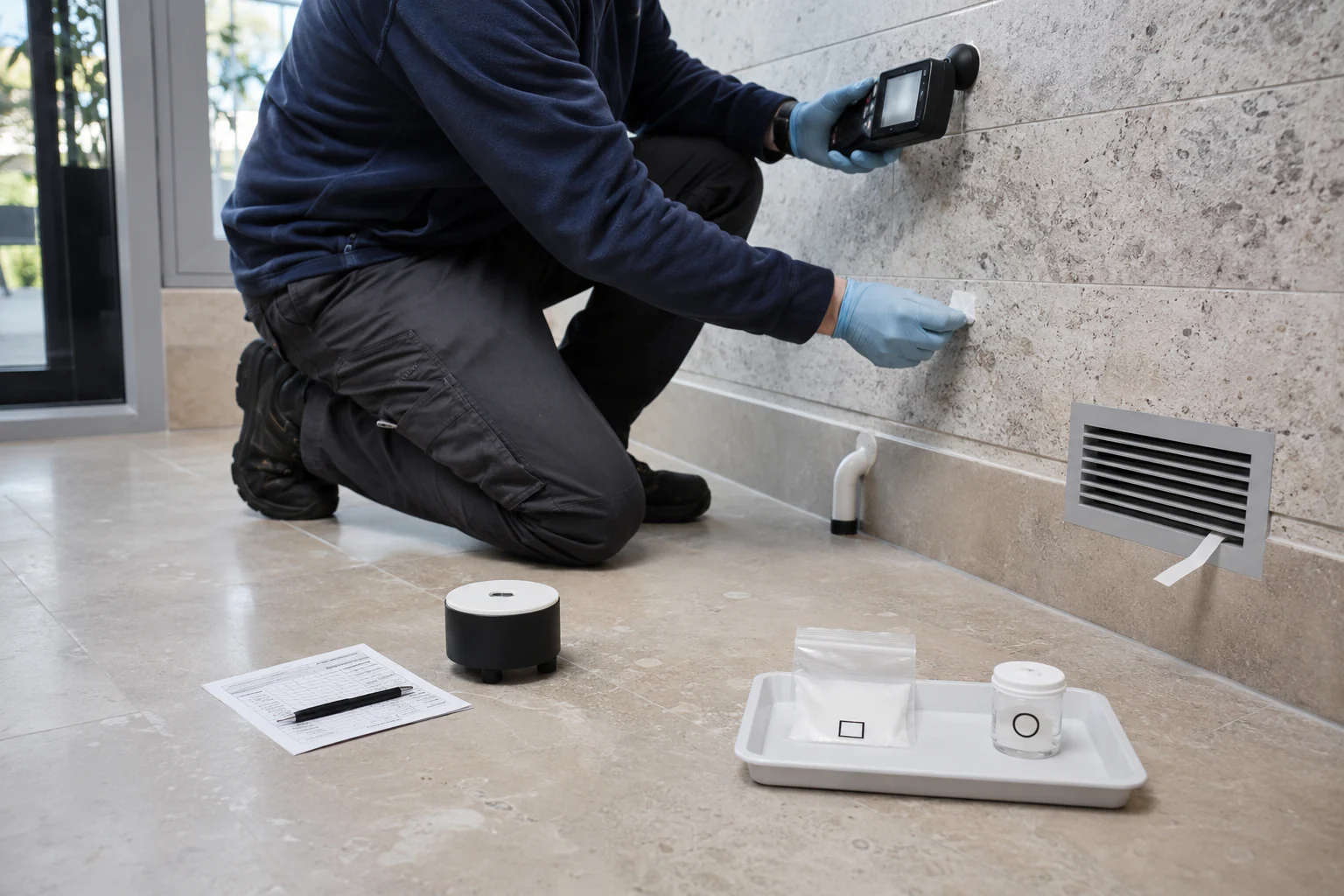
Soil, rock, building materials, water and cosmic sources all contribute to natural background radiation. Certain minerals contain trace uranium, thorium or potassium, but presence does not automatically mean a significant building risk.
Risk depends on activity, quantity, geometry, occupancy and the regulatory context. A stone name or country is not a measurement.
Radon is primarily a ground and ventilation issue
Radon is a radioactive gas produced by uranium decay in soils and rocks. It typically enters buildings through ground contact, cracks and service penetrations. Ventilation and pressure conditions strongly affect indoor concentration.
Decorative stone surfaces are rarely the main source considered in building radon strategies, but unusual materials or large quantities can justify specific assessment.
When testing is useful
Use accredited or recognised measurement methods when required by law, when a site lies in a radon-prone area, when screening identifies elevated levels or when a specific material raises a documented question.
Short indicative readings and long-term occupancy measurements answer different questions. Interpret results with a competent specialist.
| Question | Appropriate evidence |
|---|---|
| Is the building in a radon area? | Official geological or regulatory mapping |
| What is the occupied-space concentration? | Properly placed radon dosimeters over the required period |
| Does a product meet a regulatory criterion? | Declared index or accredited laboratory testing |
| How should elevated radon be reduced? | Building diagnosis, sealing and ventilation strategy |
Avoid misleading product claims
Do not describe a stone as radioactive or radiation-free without context and evidence. Similar-looking rocks can differ, and small analytical traces do not directly predict occupant dose.
Ask suppliers for relevant documentation where the product or project framework requires it.
Practical safety priorities
For most projects, good ventilation, ground detailing and compliance with local building rules are the primary controls. Occupational dust exposure during cutting is a separate and often more immediate hazard.
If concern remains, measure rather than speculate. Communicate results with units, method, comparison criteria and limitations.
Need advice for a real project?
Marble Import supports international homeowners, architects and interior designers with stone selection, samples, technical feasibility and coordination of high-end stonework in France and across Europe.