Circular economy
Circular Stone: Reuse, Design for Disassembly, Offcuts and Traceability
Extend the life of natural stone through careful dismantling, reuse, adaptable design, offcut planning, repair and material traceability.
Durability becomes circular only when value is retained
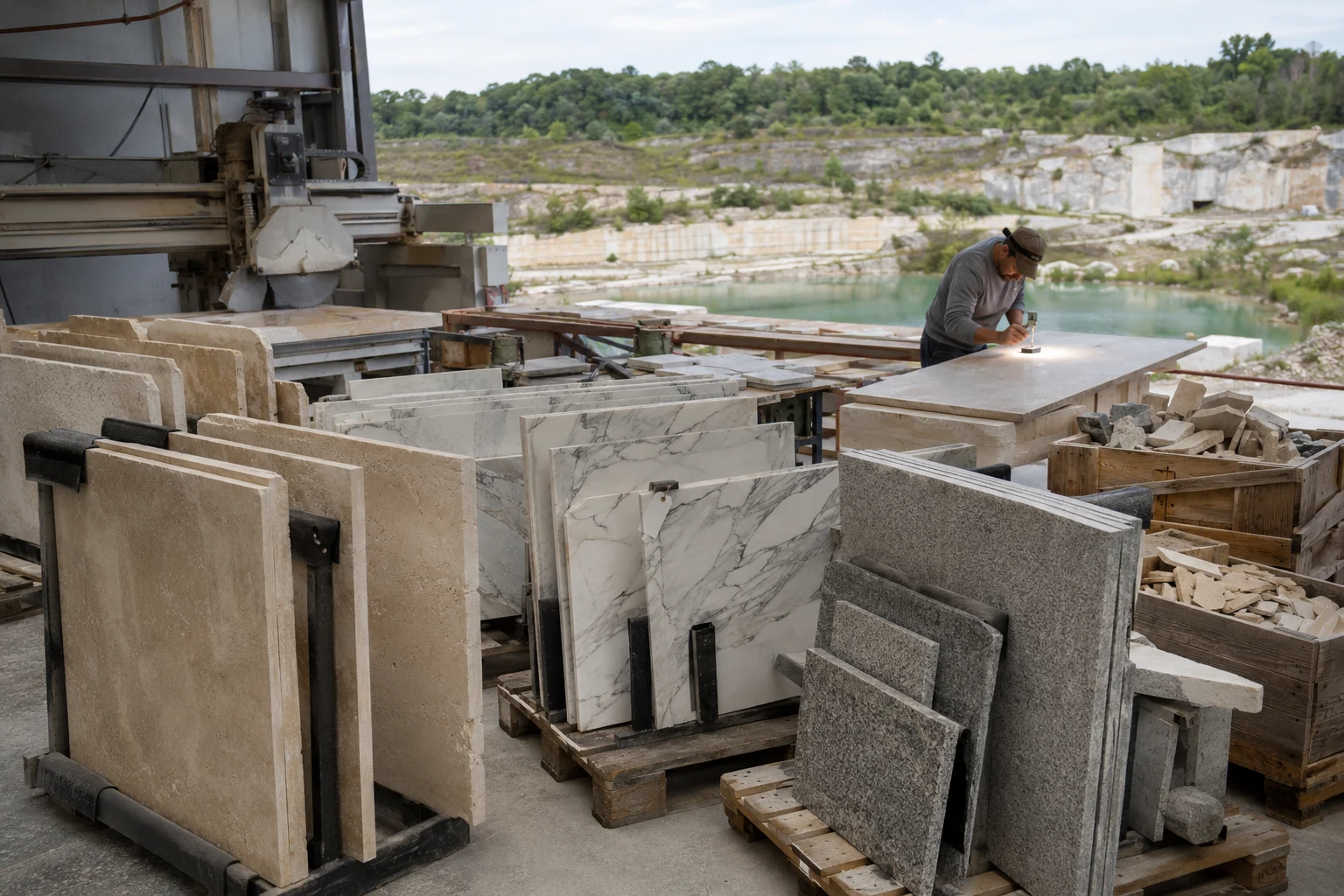
Stone can last for generations, but demolition, irreversible adhesives and lost records often turn valuable pieces into low-grade fill. Circular design protects future options.
Consider reuse from concept stage, not only when a building is dismantled.
Survey before dismantling
Record stone type, dimensions, thickness, condition, fixings, joints and previous treatments. Map pieces and photograph visible faces.
Test dismantling on a limited area to understand breakage and labour before committing a recovery target.
Design for disassembly
Mechanical or reversible assemblies, accessible fixings and modular dimensions can make future removal easier. The correct solution still must meet safety, water and structural requirements.
Avoid unnecessary composite build-ups that cannot be separated.
| Circular strategy | Example |
|---|---|
| Direct reuse | Relay recovered paving or reinstall wall panels |
| Adaptation | Cut a damaged slab into smaller components |
| Repair | Patch, repolish or replace a local piece |
| Offcut use | Shelves, skirtings, mosaics or samples |
| Material passport | Record origin, dimensions, finish and location |
| Recycling | Use unavoidable waste in suitable aggregate streams |
Qualifying reclaimed stone
Previous loading, weathering, salts, fixings and hidden repairs affect suitability. Inspect and test according to the new use and risk.
Natural patina may be valuable, but unsafe fractures and contaminated material need responsible rejection or a lower-risk use.
Traceability and business value
Piece numbers, digital inventories and storage plans reduce loss between dismantling and reuse. Match reclaimed stock to realistic project dimensions.
Circular stonework can save embodied impacts and preserve cultural value, but claims should include recovery rate, processing and transport rather than assuming every reuse is automatically beneficial.
Need advice for a real project?
Marble Import supports international homeowners, architects and interior designers with stone selection, samples, technical feasibility and coordination of high-end stonework in France and across Europe.